
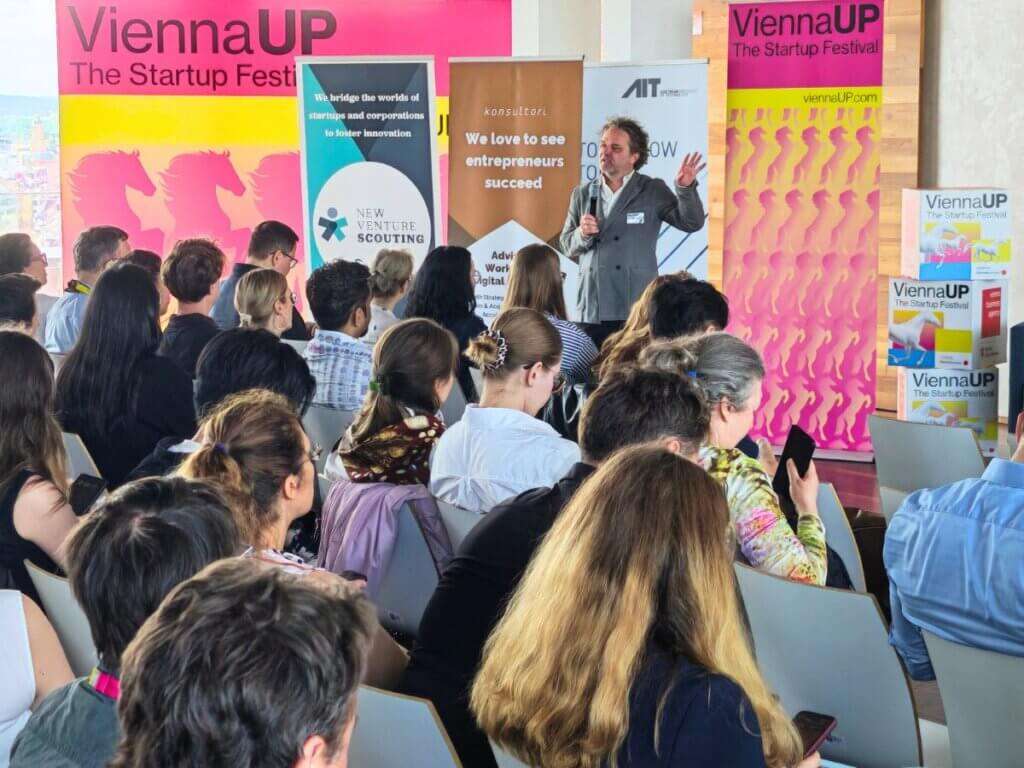
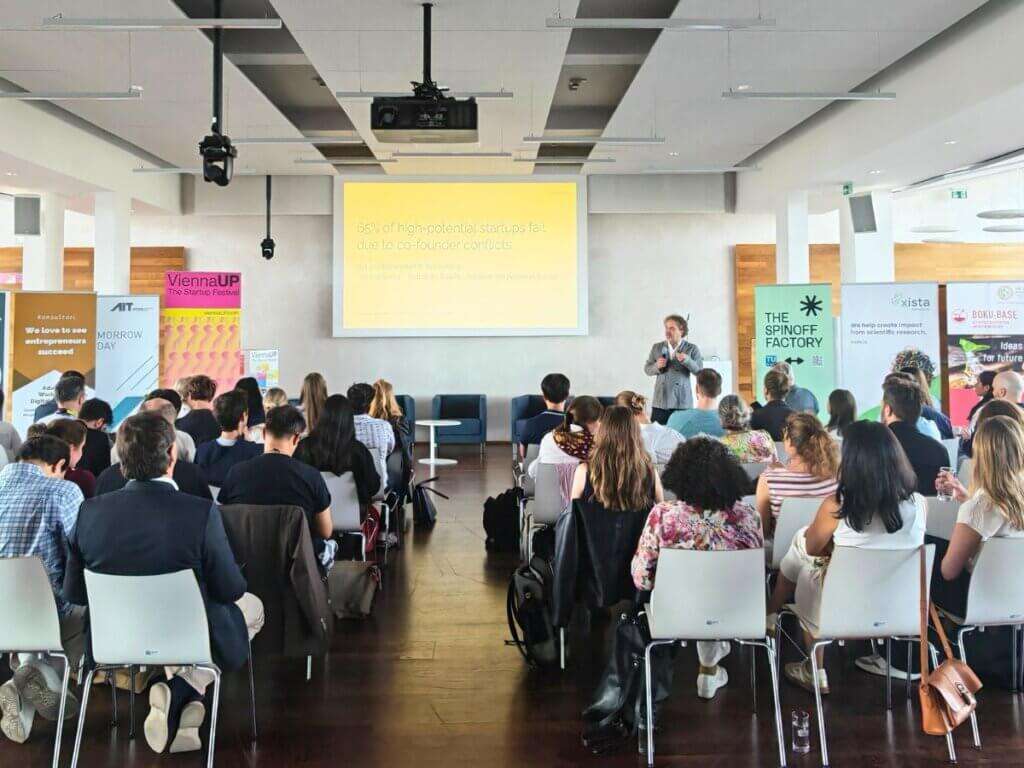
Research based on more than 10,000 founders shows that 65% of high-potential startups fail primarily because of co-founder conflict. Not product-market fit. Not funding. The breakdown rather happens at the top – between the people who built the company together. In my work with founding teams, this is the pattern I see most consistently: the technical and commercial foundations are solid, but the relational infrastructure is missing.
Co-founder alignment is not a soft topic. It is one of the most concrete predictors of whether a startup survives its early years – and one of the least structured conversations founding teams actually do have.
What Co-Founder Conflict Is Actually About
Most founders believe they are fighting about strategy, equity, or hiring. In practice, these surface arguments are almost always proxies for something deeper. In my experience, three underlying dynamics drive the majority of co-founder conflicts.
The first is Power and Control
Who gets to decide, and whose vision leads? A disagreement about a product roadmap is often, at its core, a dispute about authority. Until that is named explicitly, it cannot be resolved.
The second is Care and Closeness
Founding teams that started as friendships are especially exposed here. When the relationship becomes more professional and transactional, one or both founders can experience that shift as a withdrawal of care – even when nothing has gone wrong structurally.
The third is Respect and Recognition
In high-pressure environments, acknowledgment collapses. Founders start mentally tracking who is contributing more, sacrificing more, carrying more. That ledger is never balanced, and over time it turns into resentment.
Naming these dynamics is the first step. Conflict that stays covert cycles endlessly – only the surface issue gets addressed while the underlying needs go unresolved. The path forward requires moving from covert to overt: name the dynamic, surface the need, adapt the agreement. This is not a one-time conversation. These dynamics shift as the company scales, roles evolve, and external pressures intensify.
The Three Structural Fault Lines Every Founding Team Faces
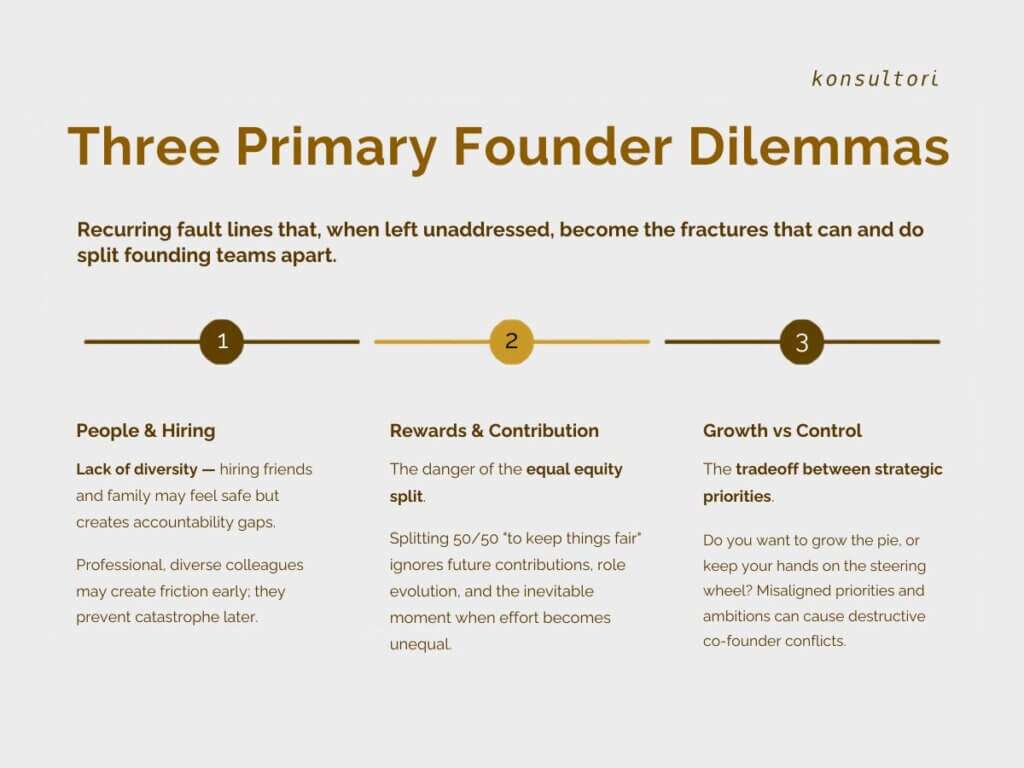
Beyond the psychological layer, there are three structural fault lines that, when left unaddressed, become the fractures that split founding teams apart.
The first is People and Hiring
Hiring friends and family feels safe but creates accountability gaps. Professional, diverse colleagues may generate early friction – and prevent catastrophe later. Who you bring in, and how you hold them accountable, is a founding-level decision that shapes the team’s ability to function at scale.
The second is Rewards and Contribution
The equal 50/50 equity split is one of the most common and most dangerous defaults in founding team agreements. It ignores future contributions, role evolution, and the inevitable moment when effort becomes unequal. Equity structures should reflect the rationale, not just the numbers. Vesting schedules, cliffs, and refresh grants are not just legal mechanics – they are statements about what the founding team believes is fair over time.
The third is Growth versus Control
This is the question of strategic priorities: do you want to grow the pie, or keep your hands on the steering wheel? Misaligned ambitions on this dimension cause some of the most destructive co-founder conflicts I have seen – because they are not always visible until a major decision point forces them into the open.
Left unaddressed, these fault lines accumulate quietly. Co-founder relationships rarely break overnight. They erode. The warning signs – avoidance of hard topics, scorekeeping, parallel decision-making, tone shifts, diverging narratives – are almost always present months before the crisis. And almost always ignored.
What Co-Founder Alignment Actually Requires
The most dangerous myth in founding team dynamics is a sentence I hear surprisingly often: “We talked about this at the beginning, so we’re fine.” Companies change. People change. Agreements must change with them.
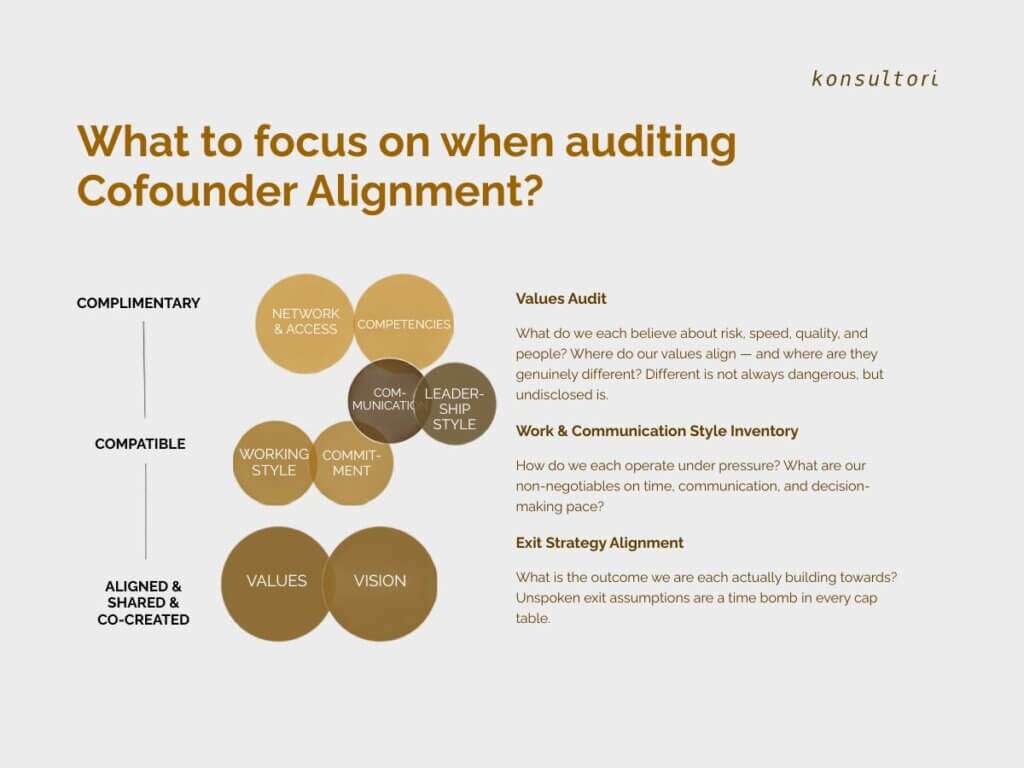
Serious co-founder alignment work is not a single workshop or a values exercise. It is an ongoing practice that touches several dimensions at once: complementary competencies and network access; compatible working styles and commitment levels; and shared, co-created values and vision. Think of it less as a conversation to have and more as infrastructure to cultivate and maintain.
In practice, a structured alignment audit focuses on three areas.
1. Values Audit
A Values Audit: what do we each believe about risk, speed, quality, and people? Where do our values align, and where are they genuinely different? Slight differences in values are not always and necessarily dangerous. Undisclosed values almost always are.
2. Work and Communication Style Inventory
How do we each operate under pressure? What are our non-negotiables around time, communication, and decision-making pace? Many founders discover in this conversation that what they experienced as a character flaw in their co-founder was simply a different working style – one that was never made explicit.
3. Exit Strategy Alignment
What outcome are we each actually building towards? This is the question that makes most founders uncomfortable, which is precisely why it matters. Unspoken exit assumptions are a time bomb in every cap table.
Five Conversations Most Co-Founders Avoid
These are the conversations that matter most – and that most founding teams never have explicitly. They should be used as a starting point for any co-founder alignment audit and revisited at every major inflection point.
- What is our “walk away” point? Defining the exit threshold in advance removes its power as a threat in the heat of conflict.
- How do we handle it if one of us is not performing? What does accountability look like between equals? Without a pre-agreed process, silence becomes resentment.
- What does “control” mean to each of us – and who has it? A democracy, a meritocracy, and a benevolent dictatorship can all work. Ambiguity cannot.
- How will equity evolve if our roles change dramatically? Vesting schedules and refresh grants are statements about what the founding team believes is fair over time. They should be documented with rationale, not just numbers.
- When did we last tell each other what we genuinely appreciate? Recognition is not soft. It is structural. Teams that acknowledge contributions regularly are more resilient under pressure.
- Deciding to go through these questions deliberately – rather than letting them surface reactively – is itself an act of alignment.
Decision-Making: Resolving Deadlocks Before They Happen
Many of the most damaging co-founder conflicts do not start as big fights. They start as small, unresolved decisions that accumulate into resentment. A pre-agreed decision-making framework is one of the most practical tools a founding team can put in place.
Domain Ownership
Domain Ownership means assigning clear decision domains to each founder. The CTO owns technical architecture. The CEO owns the fundraising narrative. Overlap zones are explicitly named and governed by consensus. When domains are unclear, operational issues become personal conflicts.
The Consent Model
The Consent Model offers a practical alternative to full consensus. Not every decision needs enthusiasm from both founders. Consent means “I can live with this.” It is faster than consensus and more honest than silence.
he Escalation Proocol
The Escalation Protocol defines when to bring in an outside voice. Agreeing in advance on the trigger – for example, three failed attempts to resolve — and the mechanism – an advisor, board member, or mediator – removes the judgment call from a moment of conflict.
The Async Decision Log
The Async Decision Log documents major decisions and the reasoning behind them. When memory fails or context shifts, the log is the source of truth – not whoever argues loudest.
What to Document Before You Build
Co-founder alignment does not only live in conversations. Some of it needs to be written down – before the first hire and reviewed at every major transition. Five elements matter most: roles and responsibilities, with clarity on what requires consensus versus individual authority; equity and vesting, with the rationale documented alongside the structure; compensation philosophy, including what happens when financial needs diverge; a decision-making protocol that names the tie-breaking mechanism; and exit and dissolution clauses that define what happens if one founder wants to leave. The principle behind all of it is the same: define the hard things in calm waters, not in a storm.
How We Can Help
At Konsultori, co-founder alignment consulting is one of the core areas where we work with founding teams at critical junctures – whether that is before the first hire, at a funding inflection point, or when friction has already begun to surface.
Our process brings together three elements. We start with an entrepreneurial competency assessment to map individual strengths, leadership styles, and communication patterns – giving the team a shared, structured language for differences that often go unnamed. From there, we move into facilitated alignment sessions on vision, values, roles, commitment, and decision rights, surfacing expectations before they calcify into fault lines. We close with a concrete development roadmap: meeting and decision routines, delegation structures, OKR design, and hiring priorities, with clear next steps and follow-up built in.
For teams already experiencing friction, the question we hear most is whether it is too late. It is rarely too late. But it is often urgent. A few well-structured sessions can shift the entire conversation – from “who is right?” to “what does the company need?”